
Hiring an overseas worker has become a practical staffing option for many businesses. Companies now use remote professionals to reduce overhead, expand support, and improve workflow without sacrificing quality. As a result, more owners are taking a closer look at what overseas staffing really offers.
For healthcare practices and administrative offices, the value can be even greater. Administrative demands continue to grow, while the cost of in-house staffing remains high.
Why Businesses Are Considering Overseas Workers
Many companies are not hiring overseas workers just to save money. They are doing it because they need dependable support, flexibility, and a more scalable staffing model.
When internal teams are overloaded, important tasks begin to slip. Billing follow-up, documentation, reporting, insurance coordination, data entry, and scheduling support can quickly become a burden. Remote staffing gives practices and businesses a way to strengthen operations without immediately adding another in-house employee.
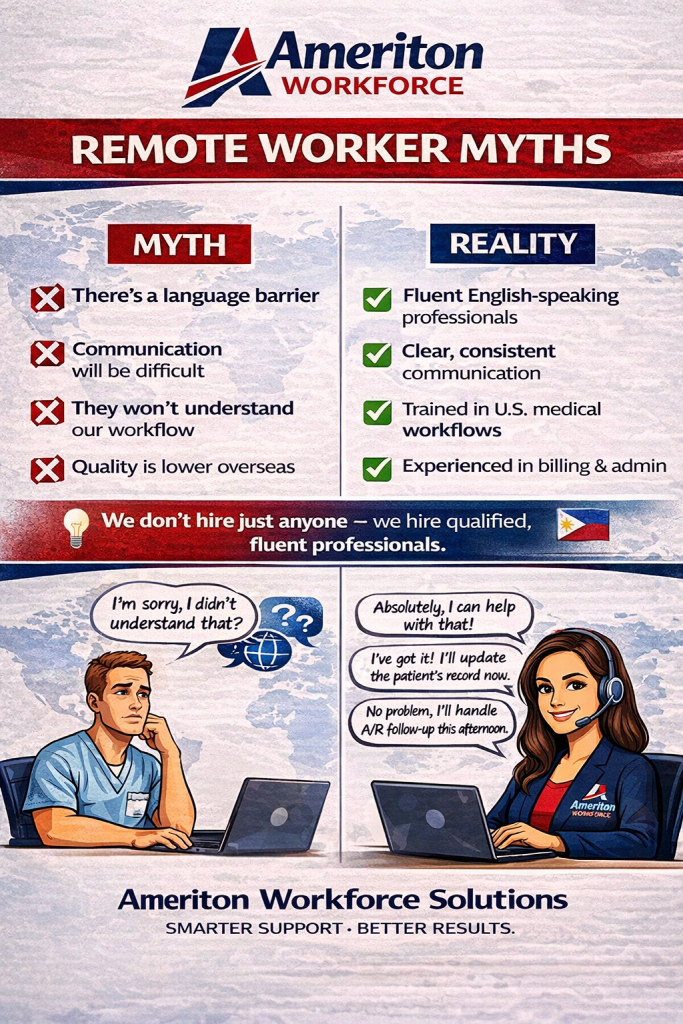
Myth 1: Overseas Workers Cannot Communicate Well
One of the biggest myths about hiring an overseas worker is that communication will always be a problem.
Reality:
Communication depends on the hiring process, training, and expectations, not just geography.
A strong overseas worker should be selected based on English fluency, responsiveness, professionalism, and role fit. Many remote professionals work daily with U.S.-based businesses and are fully capable ofhandling calls, emails, documentation, and team coordination. The issue is not whether an employee is overseas. The issue is whether the company has hired the right person and trained them properly.
Myth 2: Overseas Workers Are Lower Quality Than In-House Employees
Some employers assume that overseas hiring automatically means lower-quality work.
Reality:
The quality of work depends on screening, role alignment, and management.
A well-vetted overseas administrative professional can be just as organized, reliable, and detail-oriented as an in-house employee. In many cases, remote workers succeed because they are focused on a clearly defined set of responsibilities and are evaluated by performance.
For businesses in healthcare, quality matters most in repetitive, detail-driven workflows such as insurance verification, prior authorization follow-up, payment posting, denial tracking, reporting, and documentation support. When the right systems and accountability are in place, overseas workers can become a strong operational asset.
Myth 3: Hiring an Overseas Worker Means Losing Control
Some companies worry that remote staffing will make the business feel disconnected or difficult to manage.Reality:
A remote worker can integrate into your systems, workflows, and expectations just like any other team member.
The best overseas workers are not meant to operate independently without structure. They should be trained on your workflow, assigned clear responsibilities, and measured on consistent performance standards. Daily check-ins, standard operating procedures, shared task systems, and regular communication make a major difference.
Myth 4: Overseas Workers Are Only About Cheap Labor
This is one of the most common misconceptions.
Reality:
Cost savings matter, but the real value is operational efficiency.
Yes, hiring an overseas worker can lower overhead. But that is only part of the benefit. The bigger value is often found in reducing staff overload, improving turnaround times, and allowing in-house employees to focus on higher-priority responsibilities.
For many businesses, the true return is not just lower labor cost. It is better workflow, better support, and better use of internal resources.
Myth 5: Overseas Workers Are Not Reliable
Some employers worry about attendance, consistency, or long-term commitment.
Reality:
Reliability comes from hiring standards and management systems.
A reliable overseas worker should be treated like any other professional hire. That means setting clear expectations, defining deliverables, monitoring performance, and making sure the role is a genuine fit. When businesses skip these steps, problems happen. When they do them well, remote workers can become highly dependable members of the team.
Reliability is not determined by whether someone works in your office building. It is determined by whether your hiring and support process is strong.
Myth 6: Overseas Workers Cannot Handle Sensitive Administrative Work
This concern is especially common in healthcare and other administrative industries.
Reality:
With proper training, processes, and compliance expectations, remote professionals can support sensitive workflows effectively.
Remote administrative support is most effective when there are clear boundaries, training, and defined procedures for handling workflow responsibilities. The key is not avoiding remote support altogether. The key is implementing it correctly.
What Businesses Should Look for When Hiring an Overseas Worker
If you are considering hiring an overseas worker, focus on these areas:
1. Strong English fluency
The worker should communicate clearly in writing and, if needed, verbally.
2. Relevant role experience
Look for experience in the exact kind of administrative work you need supported.
3. Attention to detail
This is especially important for billing, documentation, verification, and task tracking.
4. Clear onboarding
The worker should be trained on your systems, expectations, and workflow priorities.
5. Performance accountability
Use task tracking, check-ins, and process documentation to keep quality high.
6. Role fit
Not every task should be delegated in the same way. Start with structured, repeatable responsibilities that can be measured clearly.
The Reality: Overseas Workers Can Be a Smart Business Move
The truth is simple. Hiring an overseas worker is not inherently risky, ineffective, or low quality. In many cases, it is one of the most practical ways for a growing business to improve support without taking on the full burden of another in-house hire.
For healthcare practices in particular, the right remote administrative professional can help reduce back-office strain and support tasks such as billing, prior authorizations, insurance verification, reporting, and documentation.
The real difference is not whether the worker is overseas. The real difference is whether the business has a smart hiring process, proper training, and clear expectations.
Final Thoughts
The myths around hiring overseas workers often come from outdated assumptions. The reality is that global remote staffing has become a practical, scalable solution for businesses that need reliable administrative support.
When done correctly, hiring an overseas worker can improve efficiency, reduce overhead, and give your in-house team more room to focus on the work that matters most.
Looking for reliable remote administrative support for your practice? Ameriton Workforce Solutions helps healthcare practices strengthen billing, prior authorizations, insurance verification, and back-office operations with trained remote administrative professionals.
You can learn more on our Remote Medical Staffing FAQ or contact us today for a free consultation.

Leave a Reply